Discover A NEW treatment option for GLAUCOMA
Netra Restoration Therapy (NRT) Stops Glaucoma Progression and Improves Vision.
No Surgery - Scientifically Evaluated
Discover A NEW treatment option for GLAUCOMA
Ocular Cytokine Regulation (OCR) Stops Glaucoma Progression and Improves Vision.
No Surgery - Scientifically Evaluated
GUARANTEED TO IMPROVE VISION
See Improved Vision in 7 days or Take a Full Refund!
Money Back Guarantee!
DID YOU KNOW?
Recent studies shows that vision loss in glaucoma can occur even when intraocular pressure (IOP) is well controlled.
About 40% of glaucoma patients never have elevated eye pressure (a condition called Normal Tension Glaucoma), yet they still experience vision loss.
If your treatment focuses only on lowering eye pressure, other causes of glaucoma may remain unaddressed, which can lead to continued vision loss.
Know The FACTS
EYE PRESSURE IS NOT THE ONLY CAUSE OF GLAUCOMA
Increased Inflammation and Oxidative Stress, Reduction in Blood Supply and Neurotrophins all combined contribute to Glaucoma vision loss.
ARE YOU TREATED FOR ALL OF THESE TO PREVENT VISION LOSS?
WHAT IS NRT?
Netra Restoration Therapy (NRT) is a ground breaking treatment shown to improve ocular blood flow, reduce ocular inflammation and improve neurotrophins using acupuncture and herbal medicine.
NRT exhibits the following multi-component, multi-pathway and multi-targeted synergistic mechanism of action for treatment of Glaucoma.
Reduce Ocular Inflammation
Reduce Oxidative Stress (harmful cell damage in the eye)
Reduce Ferroptosis (cell death that damages vision cells)
Regulate Cytokines
Improve Ocular Blood Flow
Reduce Ocular Excitotoxcity
Supply Neurotrophins (protect the optic nerve from further damage)
Supply Antioxidants
NRT offers several compelling advantages for Glaucoma patients compared to conventional treatments.

Halts Progression of Glaucoma
By eliminating ocular inflammation and its co-factors, the progression of Glaucoma can be halted

Reversal of Vision Loss*
Visual field is improved by restoring dormant and unhealthy retinal cells.

Improved Visual Acuity
All Glaucoma patients have shown to have improvement in visual acuity. Our standard of "Normal Vision" is 20/15 not 20/20.

Myopic Improvements
Glaucoma patients with myopia see an improvement in visual acuity and a reduction in prescription power.

Dry Eye Improvement
Patients with dry eyes experience improved
comfort due to a reduction
in dry eye symptoms.

Avoid Need For Surgery
Prevent complications
arising from surgical treatments by improving your eye health.
*Reversal of vision loss depends on the Cup-To-Disc ratio and the availability of dormant and unhealthy retinal cells.

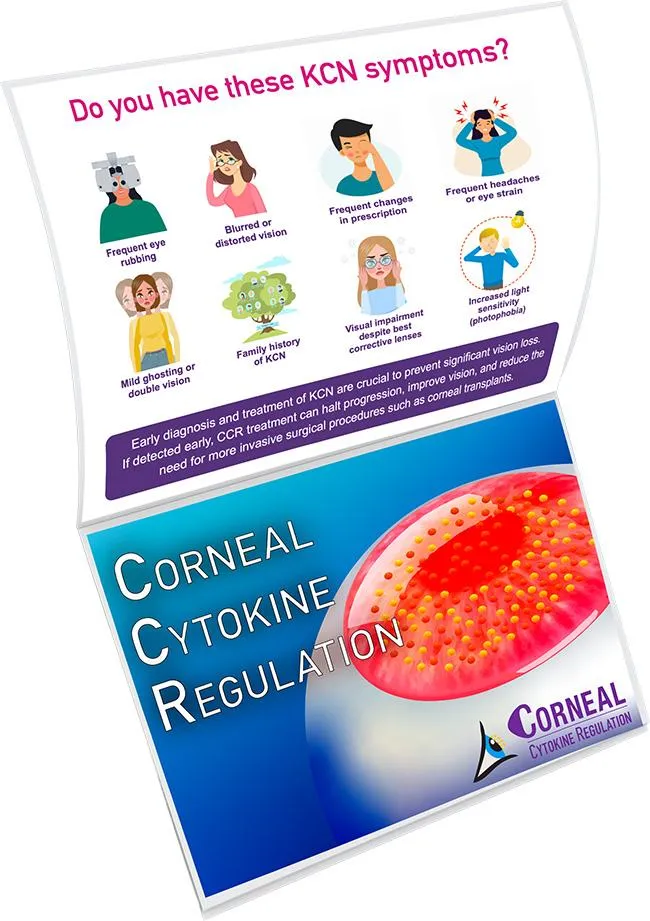
Halts Progressions of KCN
By eliminating ocular inflammation and its co-factors, the progressions of KCN can be halted

Reversal of Keratoconus
As ocular inflammation and related factors are addressed, the cornea begins to heal and reshape.
Improved Visual Acuity
All KCN patients have shown improved visual acuity. Our standard for "Normal Vision" is 20/15, not 20/20.

Myopic Improvements
Keratoconus patients with myopia see an improvement in visual acuity and a reduction in prescription power.

Dry Eye Improvement
Patients with dry eyes experience improved comfort due to a reduction in dry eye symptoms.

Avoid Surgery
Prevent issues such as corneal rejection, scarring, keratitis, and glaucoma post-surgery.
NRT exhibits multi-component, multi-pathway and multi-target synergistic mechanism of action for treatment of Glaucoma.

“I had good improvement in visual field, visual acuity, and overall eye health.
Vision is now clearer, able to see lines further and colors are more brighter and vivid.”
My visual field improved from -6.89 db to -3.86 db on right eye and from -9.22 db to -2.05 db on left eye.
My prescription reduced from -4.25 to -3.00 on right eye and -6.50 to -4.00 on left eye and now I have 20/20 vision even with reduced prescription.
- MARTIN

“ After treatment my visual field and visual acuity have improved. IOP is more stable now.”
I am now able to read 20/15 line with lower prescription glasses. Prescription lowered from -6.0 to -4.75 on left eye and -5.0 to -3.75 right eye with 20/15 visual acuity.
My near vision condition was eliminated and don't biofocal glasses anymore.
- SARANG
Know The FACTS
CAUSES OF GLAUCOMA
Have you been treated for all of these causes?
Reduced Ocular Blood Flow & Vascular Dysregulation, Ocular Inflammation & Oxidative Stress, Neurotrophin Deprivation and Ferroptosis all contribute to Glaucoma vision loss.

20/15
Our standards of normal version is beyond 20/20
Most patients achieve 20/15 vision after successfully completing their first round of NRT treatment. About 20% can even read a few letters on the 20/10 line.
NRT revitalizes retinal nerve cells. improving their function and enhancing visual clarity and acuity.
HEAR FROM OUR PATIENTS
Glaucoma - Advanced Stage - Vision Restored
Glaucoma & Vision Loss Improved
Glaucoma Treatment - Vision Restored
Improved Vision and IOP from Glaucoma
MOST ASKED QUESTIONS
Why Netra Restoration Therapy (NRT) is not covered by my insurance?
Netra Restoration Therapy (NRT) is a holistic therapy which uses Traditional Chinese Medicine (TCM) consisting of acupuncture and herbal supplements for treatment of Glaucoma.
Holistic therapies such as acupuncture and herbal medicines to treat chronic ocular conditions are not covered by insurance.
Why is my eye doctor only treating my Glaucoma by reducing the IOP when other factors contribute to vision loss?
Pharmaceutical research to treat reduced ocular blood flow, antioxidants, neurotrophic factor therapies, and ferroptosis regulation is ongoing and still remains mostly in preclinical or early clinical trial stage.
Can Glaucoma be cured?
Once damage to the optic nerve and vision loss has occurred, it cannot be reversed. NRT however helps restore back dormant and unhealthy retinal cell to improve the visual field.
NRT prevents vision loss and damage to the optic nerve and retinal cells by improving ocular blood flow, reducing ocular inflammation, oxidative stress, and ferroptosis and increasing neurotrophins and antioxdiants.
Are there new treatments for Glaucoma to treat root cause?
Netra Restoration Therapy (NRT) prevents vision loss and damage to the optic nerve and retinal cells by improving ocular blood flow, reducing ocular inflammation, oxidative stress, and ferroptosis and increasing neurotrophins and antioxdiants.
Is Netra Restoration Therapy (NRT) treatment FDA approved?
Netra Restoration Therapy is a holistic therapy which uses Traditional Chinese Medicine (TCM) consisting of acupuncture and herbal supplements for treatment of Glaucoma. Acupuncture and herbal treatments offered by Traditional Chinese Medicine (TCM) are not subject to FDA approval.
How fast does Glaucoma progress?
Glaucoma progression is unpredictable but often has rapid progression in some patients. Early diagnosis and treatments such as IOP reduction and Netra Restoration Therapy are key to avoiding progression and avoid severe vision loss.
Is Glaucoma hereditary?
Yes, glaucoma has a strong hereditary component, but the exact inheritance depends on the type of glaucoma. If you have a parent, sibling, or child with glaucoma, you should have regular comprehensive eye exams, starting earlier than usual (often from age 30–35 instead of waiting until 40+).
However, heredity is not the only factor — lifestyle, vascular health, and intraocular pressure still matter.
REFERENCES
-
Increased inflammatory mediators in the ocular surface tissue in keratoconus – Albert Santos, José APM Filho et al.
Summary: The Interleukin-5 (IL-5) and Interleukin-6 (IL-6) cytokines were higher in the corneal epithelium of the keratoconus group, indicating increased inflammation in ocular tissues. Greater immune activity was observed in the corneal and conjunctival epithelial cells of keratoconus patients based on IL-5 and IL-6 gene expression. -
Increased lacrimal inflammatory mediators in patients with keratoconus – Gustavo Souza Moura, Albert Santos et al.
Summary: Inflammatory activity appears to contribute to keratoconus development. Among 21 cytokines analyzed, 14 were found in higher concentrations in the tears of keratoconus patients compared to healthy individuals. IL-6 was notably elevated and correlated with disease severity. -
Keratoconus: an inflammatory disorder? – V Galvis, T Sherwin et al.
Summary: This review highlighted increased levels of interleukin-6 (IL-6), tumor necrosis factor-alpha (TNF-a), and matrix metalloproteinase-9 (MMP-9) in the tears of keratoconus patients, suggesting an inflammatory component to the disease. Eye rubbing, a known risk factor for keratoconus, was associated with elevated tear levels of MMP-13, IL-6, and TNF-a, indicating that mechanical trauma may contribute to the inflammatory response. -
Tear film inflammatory mediators in patients with keratoconus – Rana Sorkhabi, Amir Ghorbanihaghjo et al.
Summary: The study found that patients with keratoconus had significantly higher levels of Interleukin 6 (IL-6), Interleukin 1 beta (IL-13), and Interferon-gamma (IFN-y) in their tear film compared to normal controls. -
Cytokine Expression in Keratoconus and its Corneal Microenvironment: A Systematic Review – Robert Wisse, Jonas Kuiper, Renze Gan et al.
Summary: The review identified increased levels of pro-inflammatory cytokines, including interleukin-6 (IL-6), tumor necrosis factor-alpha (TNF-a), and matrix metalloproteinase-9 (MMP-9), in the tear film and corneal tissue of keratoconus patients. -
Serum inflammatory biomarkers are associated with increased choroidal thickness in keratoconus – João Pinheiro-Costa, Mário Lima Fontes et al.
Summary: The study suggests a relationship between increased choroidal thickness and inflammatory mechanisms in keratoconus patients. Elevated serum inflammatory indices — neutrophil/lymphocyte ratio (NLR), platelet/lymphocyte ratio (PLR), and systemic immune inflammation index (SII) — provide additional evidence of systemic inflammation's role in the development of keratoconus.
Download NRT Brochure
ENGLISH
SPANISH / Español
Copyright © 2025 | NETRA EYE INSTITUTE